Shifts in Player Acquisition Tactics Within Regulated British Online Gaming Environments
Written by David Müller · Oct 23, 2026

Shifts in Player Acquisition Tactics Within Regulated British Online Gaming Environments
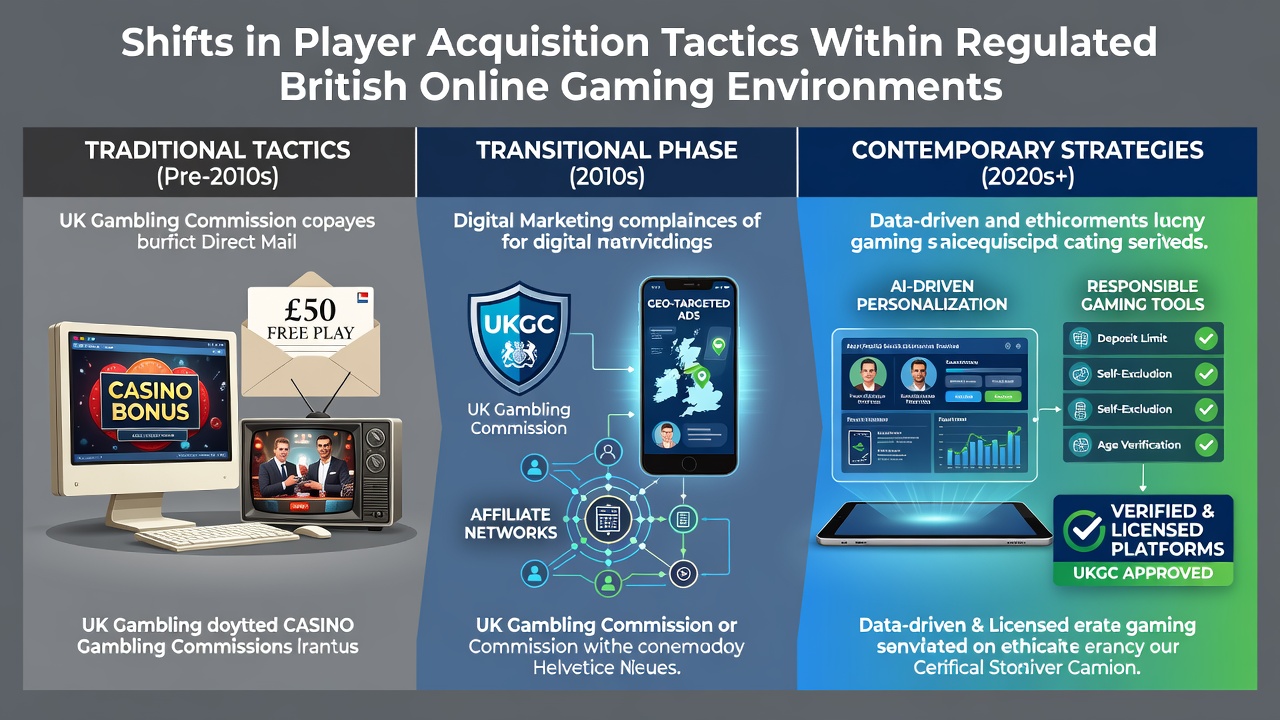
Operators in Britain's regulated online gaming sector have adjusted their player acquisition approaches over recent years as regulatory frameworks and consumer expectations continue to evolve, and data from industry reports show increased emphasis on compliant marketing channels alongside technology-driven personalization methods. These changes reflect broader patterns where companies integrate stricter advertising standards with data analytics tools to reach potential users while maintaining adherence to licensing conditions.
Research indicates that traditional methods relying heavily on broad promotional campaigns have given way to more targeted strategies, and this transition accelerated around 2024 as platforms refined their use of customer relationship management systems. Observers note that many operators now prioritize organic search optimization and content partnerships over direct bonus advertisements, which aligns with updates in consumer protection guidelines across multiple jurisdictions.
Regulatory Influences on Marketing Channels
European regulatory bodies outside the UK have documented similar patterns, with the European Gaming and Betting Association publishing figures that reveal a 15 percent rise in compliant affiliate partnerships between 2023 and 2025. These partnerships often incorporate responsible gaming messaging directly into acquisition funnels, and operators report that such integrations help sustain user engagement without triggering compliance reviews. Data shows this approach has expanded in Britain as well, where platforms balance promotional reach with mandatory age verification and spending limit tools embedded at signup stages.
By October 2026 several operators had implemented AI-assisted segmentation to identify high-value prospects through behavioral signals rather than blanket email blasts, and studies from academic institutions confirm that these methods improve conversion rates while reducing exposure to at-risk demographics. Those who have analyzed market data find that the shift reduces reliance on short-term incentive offers in favor of long-term loyalty frameworks built around personalized game recommendations.
Technology Integration and Data Utilization
Analytics platforms now play a central role in acquisition, and companies deploy machine learning models to predict which marketing touchpoints yield the highest retention among verified users. Figures reveal that investment in these technologies grew steadily after 2022, coinciding with tighter rules on third-party cookie usage that forced many firms to develop first-party data strategies. Researchers discovered that British operators who adopted consent-based tracking early experienced smoother transitions when privacy regulations tightened further in 2025.
Partnerships with payment providers have also changed, as seamless deposit experiences now serve as subtle acquisition hooks integrated into onboarding flows. Evidence suggests these collaborations help lower drop-off rates during registration, and one case study highlighted how a mid-sized operator increased verified signups by 22 percent after streamlining its payment gateway options with built-in verification layers. The reality is that such technical refinements complement broader marketing efforts rather than replace them.
Emerging Partnership Models
Industry organizations report growing interest in co-branded content initiatives with entertainment platforms, and these arrangements allow operators to reach audiences through non-gaming contexts while embedding regulatory safeguards. Canadian provincial regulators, for instance, have tracked parallel developments where licensed entities collaborate with media partners on educational campaigns that double as soft acquisition tools. Those examining British trends note similar experiments gaining traction, particularly around sports-related content that funnels users toward verified gaming environments.
Community-driven referral programs have undergone updates too, with operators introducing tiered rewards that emphasize sustained play over initial deposits. According to findings from the Alcohol and Gaming Commission of Ontario, comparable programs in other regulated markets show improved long-term user quality when combined with mandatory responsible gaming checkpoints. British platforms appear to be testing scaled versions of these models, focusing on transparency around reward structures to align with evolving consumer expectations.
Conclusion
The landscape of player acquisition in Britain's regulated online gaming sector continues to adapt through layered combinations of technology, compliant partnerships, and data-informed targeting, and these adjustments reflect ongoing responses to both regulatory requirements and market dynamics. Observers continue to track how these tactics develop through 2026 and beyond, with emphasis on measurable outcomes in user verification and retention metrics.